







School Shootings in Türkiye: Security Crisis & Solutions
A Cycle of Violence in Schools: Türkiye’s Education Security Dossier
Introduction: Educational Sanctuaries Under the Shadow of Violence
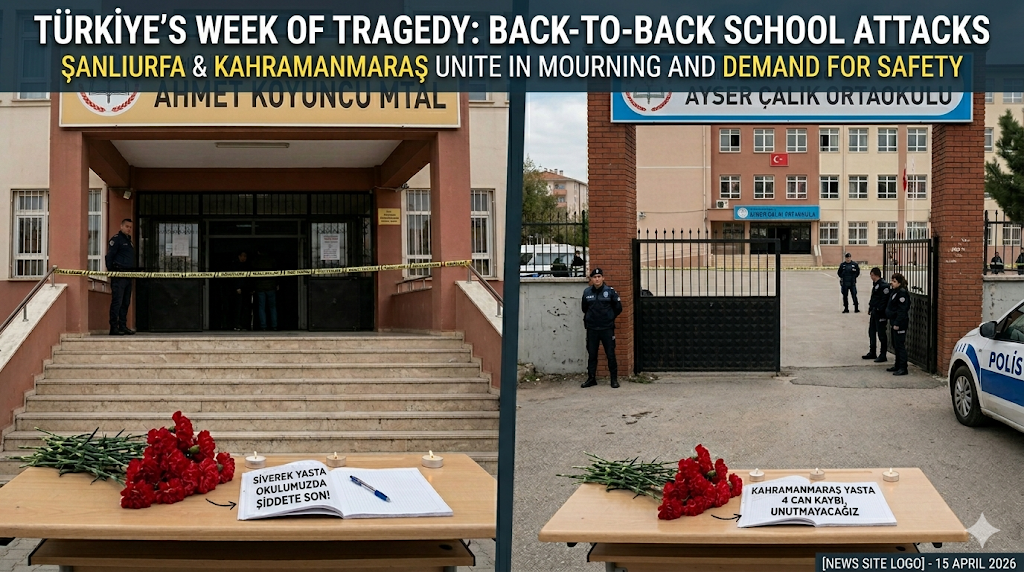
On April 14 and 15, 2026, Türkiye witnessed two of the darkest days in its educational history. The armed attacks that originated in the Siverek district of Şanlıurfa and escalated the following day in the Onikişubat district of Kahramanmaraş have sent shockwaves across the nation. The long-standing conviction that schools are “the safest harbors” has been shattered by the sound of gunfire. This article examines the details of both incidents, their societal implications, and the comprehensive solutions proposed by experts to combat this rising wave of violence.
Anatomy of the Incidents: Two Tragedies in 48 Hours
Siverek: A Massacre Announced on Social Media
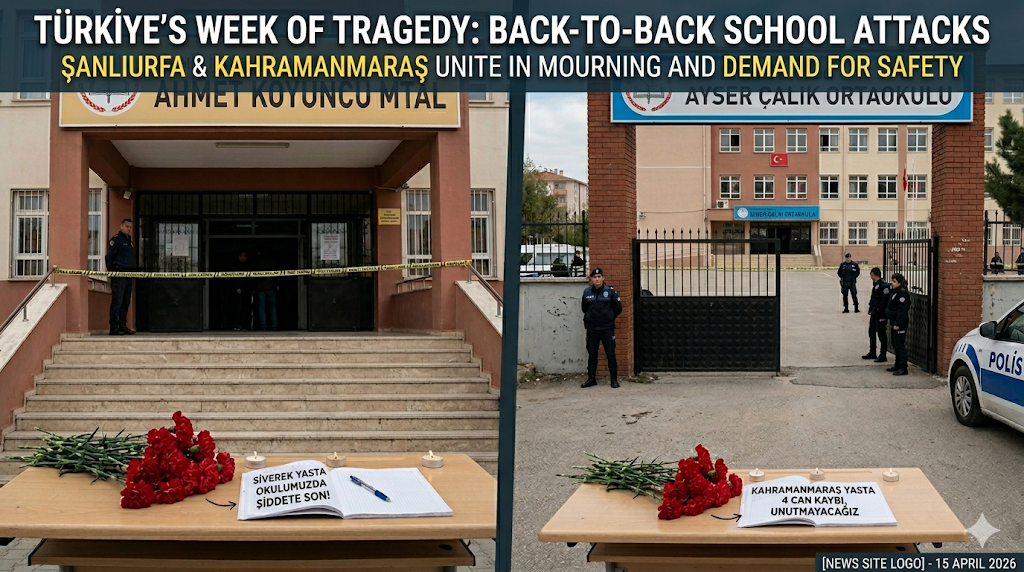
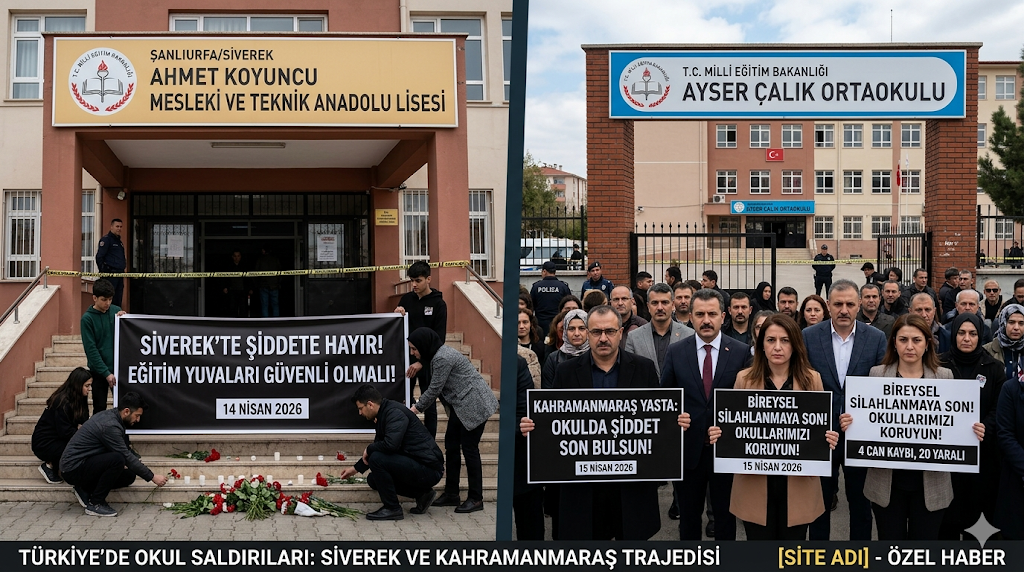
The events of April 14 at Ahmet Koyuncu Vocational and Technical Anatolian High School in Siverek served as a grim testament to how digital radicalization can manifest as real-world violence. Investigations revealed that the 19-year-old assailant—a former student—had posted “massacre rehearsals” on social media days prior to the attack. Exploiting security vulnerabilities to enter the premises, the gunman opened fire, wounding 16 individuals before taking his own life. This tragedy has left behind a traumatized student body and urgent, unanswered questions regarding surveillance.
Kahramanmaraş: A Profound Catastrophe at a Young Age
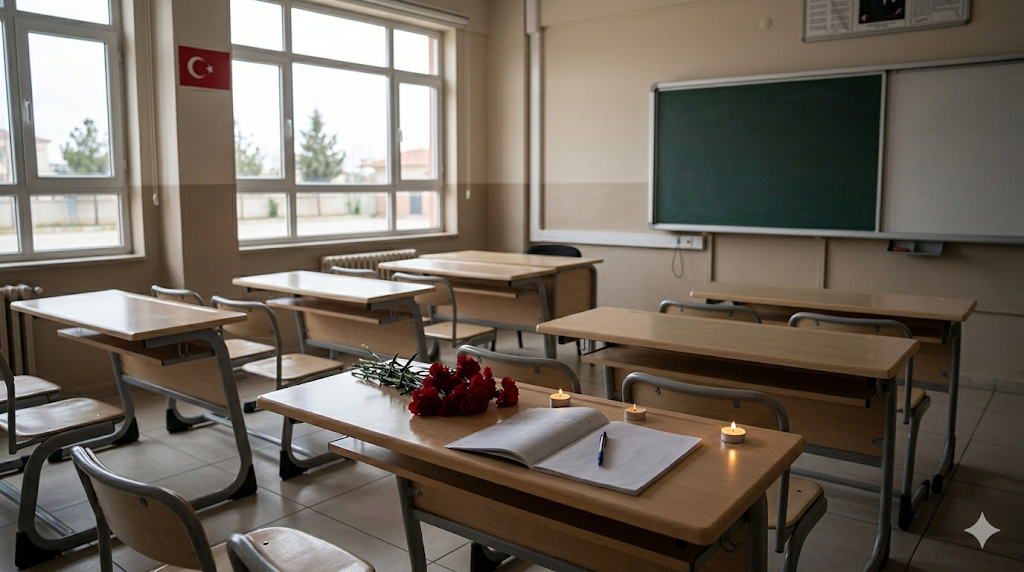
While the nation was still reeling from the events in Siverek, reports from Ayser Çalık Middle School in Onikişubat, Kahramanmaraş, further intensified the crisis. A 14-year-old 8th-grade student entered the school carrying multiple firearms belonging to his father and opened fire within the classrooms. This incident stands as one of the most tragic school shootings in modern Turkish history, resulting in four fatalities—one teacher and three students—and 20 injuries. It starkly highlights the lethal intersection of minors, unregulated access to weapons, and inadequate domestic security.
The Causes: Fault Lines Fueling the Violence
Experts emphasize that these attacks cannot be attributed to a single factor; instead, they are the culmination of a multi-layered societal erosion.
1. Proliferation of Firearms and Lack of Oversight
In the Kahramanmaraş incident, the ease with which the minor accessed his father’s firearms has placed individual armament at the forefront of the national agenda. Firearms kept in homes for “self-defense” often lack stringent oversight and secure storage, making them dangerously accessible to children and adolescents.
2. Social Media and the Quest for Notoriety
The Siverek assailant’s premeditated announcement of the crime reflects the nihilistic violent trends of the digital age. The drive for online visibility, compounded by exposure to violent gaming content and extremist forums, can radicalize vulnerable youth who suffer from a lack of social belonging.
3. School Security and Counseling Deficiencies
Significant criticism has been directed at both physical security protocols—such as the absence of professional security personnel—and the shortcomings of school counseling services in providing “early warning” detection. The inability to identify at-risk students beforehand creates a vacuum where such outbursts become possible.
Societal and Institutional Responses
In the wake of these tragedies, education unions and civil society organizations have mobilized. Teachers across Türkiye have initiated a nationwide strike, asserting that their workplace safety has been compromised. Joint statements declared: “We refuse to accept an education system written with the blood of teachers and students.” While the Ministry of National Education (MEB) and the Ministry of Interior are coordinating emergency action plans, the public demands more immediate and deterrent legislative action.
The Path Forward: Restoring Safety in Schools
To ensure the sanctity of educational institutions, a combination of short, medium, and long-term strategies is imperative:
- Strict Gun Control Legislation: Implementation of mandatory psychological evaluations for licensed gun owners and severe criminal penalties for the improper storage of firearms in households.
- Digital Literacy and Monitoring: Leveraging AI-supported systems to monitor cyberbullying and violent rhetoric on social platforms, coupled with real-time reporting to law enforcement.
- Professionalized Campus Security: Enhancing physical protection at school entrances to meet high-level security standards, moving beyond mere symbolic measures.
- Comprehensive Psychological Support: Increasing the ratio of school counselors to students and conducting regular “behavioral risk” assessments to identify early signs of aggression.
Conclusion: Never Again
The lives lost in Şanlıurfa and Kahramanmaraş represent bullets fired at the future of an entire society. To prevent these tragedies from becoming mere “statistics,” the state, families, and educators must act with a unified sense of responsibility. Türkiye must resolve this crisis to purge its education system of violence, ensuring that parents no longer feel fear when waving goodbye to their children at the school gates.
References
- Republic of Türkiye Ministry of National Education (MEB): (April 15, 2026). “Official Statement Regarding Safety Protocols and Security Measures in Schools.” Retrieved from meb.gov.tr.
- Ministry of Interior – Directorate General of Security (EGM): (April 15, 2026). “Preliminary Investigation Report on the School Incidents in Şanlıurfa and Kahramanmaraş, Ref No: 2026/04.”
- Anadolu Agency (AA): (April 14, 2026). “Armed Assault at Siverek Vocational High School: Casualties and Suspect Identification Updates.”
- TRT World News: (April 15, 2026). “Tragedy in Kahramanmaraş: Four Confirmed Dead in Middle School Shooting.”
- Education and Science Workers’ Union (Eğitim-İş): (April 15, 2026). “National Strike Declaration: Demand for Violence-Free Schools and Occupational Safety.”
- Turkish Psychological Association (TPD): (2026). “Psychosocial Analysis on Youth Radicalization and the Prevention of School-Targeted Violence.”
- Umut Foundation (Umut Vakfı): (2026). “Annual Report on Individual Armament and Gun Violence Trends in Türkiye.”



İLGİNİZİ ÇEKEBİLECEK DİĞER KONULAR

ZİYARETÇİ YORUMLARI
BİR YORUM YAZ